News

Aluminum Density: Why 2.70 g/cm³ Is Not Enough to Estimate Die Casting Cost

2026-09-27 0 Leave me a message

Aluminum has a density of about 2.70 g/cm³. That answer takes one line. Using it to predict the weight and cost of a die-cast part is where things become less simple.

A buyer may multiply the CAD volume by 2.70 and expect the quotation to follow. Then the first samples arrive heavier than expected, the material estimate changes, or the die caster explains that the shot weight is much higher than the finished-part weight. None of this means the density value is wrong. It means density is only one part of the calculation.

At Huayinsheng, we use density as a starting point—not as a shortcut. The alloy, net part volume, runner and overflow system, machining allowance, inserts, surface finish and production yield all affect the number that finally matters: the cost of a conforming finished part.

What Is the Density of Aluminum?

The commonly quoted density of aluminum is approximately 2.70 g/cm³ at room temperature. The same value can be written as:

  • 2.70 g/cm³
  • 2,700 kg/m³
  • 0.0975 lb/in³, approximately

This is why aluminum is attractive for housings, brackets, covers and structural components where weight matters. It is roughly one-third the density of steel and substantially lighter than zinc alloys.

However, a die-casting buyer is rarely purchasing pure aluminum. The actual material is an alloy containing silicon, copper, iron and other elements. Those additions change castability, strength, machining behavior—and density.

ADC12 Density: The Number We Use for an Early Estimate

ADC12 is the aluminum die-casting alloy Huayinsheng uses most often. Its typical density is approximately 2.74 g/cm³. The exact value can vary slightly with the applicable material specification and actual chemical composition, so certified material data should be used when a project requires a controlled engineering calculation.

Material Typical density Practical meaning
Pure aluminum About 2.70 g/cm³ Useful as a general reference, but not the best value for every casting alloy
ADC12 About 2.74 g/cm³ A practical starting value for the aluminum alloy we commonly die cast
Zamak 3 / Zamak 5 About 6.6–6.7 g/cm³ Much heavier, but often excellent for thin walls, fine detail and dimensional stability

These are typical engineering values for early comparison, not substitutes for a project-specific material certificate.

How to Calculate the Theoretical Weight of an Aluminum Part

Weight (g) = Volume (cm³) × Density (g/cm³)

For an ADC12 part: Weight (g) ≈ CAD volume (cm³) × 2.74

Suppose a finished component has a net CAD volume of 125 cm³:

  • Using 2.70 g/cm³ gives an estimated weight of 337.5 g.
  • Using a typical ADC12 value of 2.74 g/cm³ gives 342.5 g.

A five-gram difference may look unimportant. Across hundreds of thousands of parts, it is no longer a rounding error. But even 342.5 g is still only the theoretical net casting weight. It is not the amount of metal the die-casting machine must inject for every shot.

Why the Finished Part Weight Is Not the Shot Weight

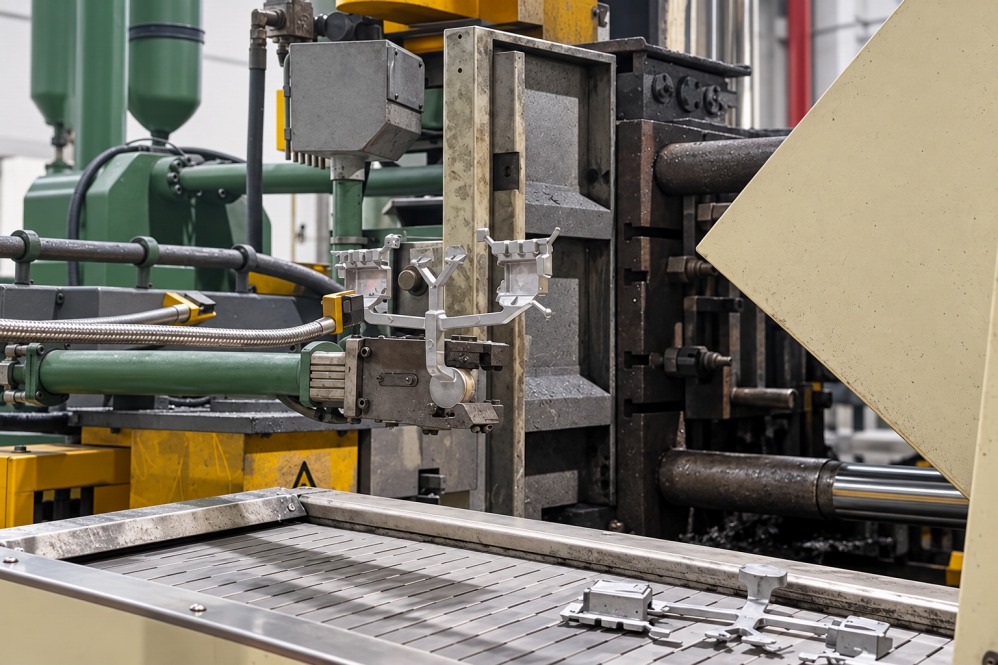
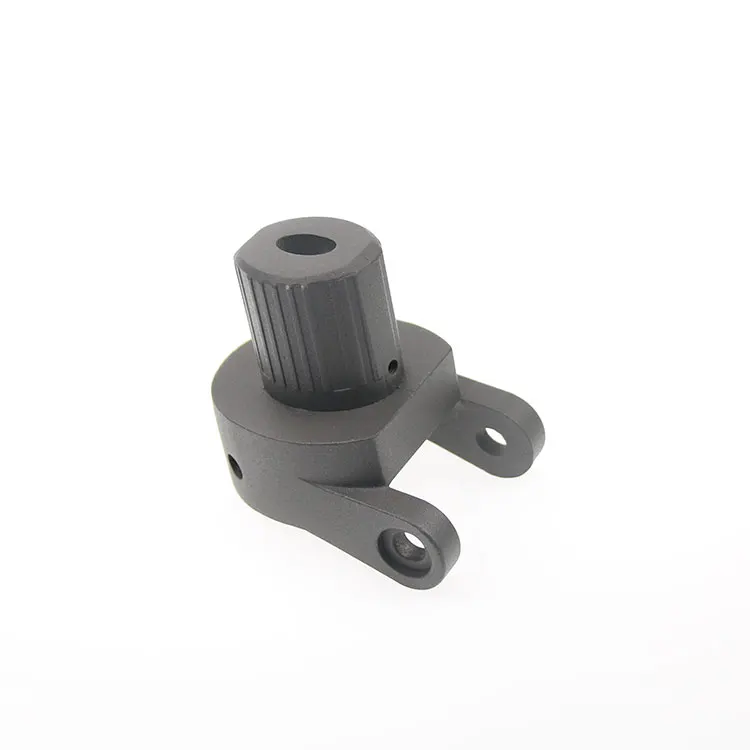
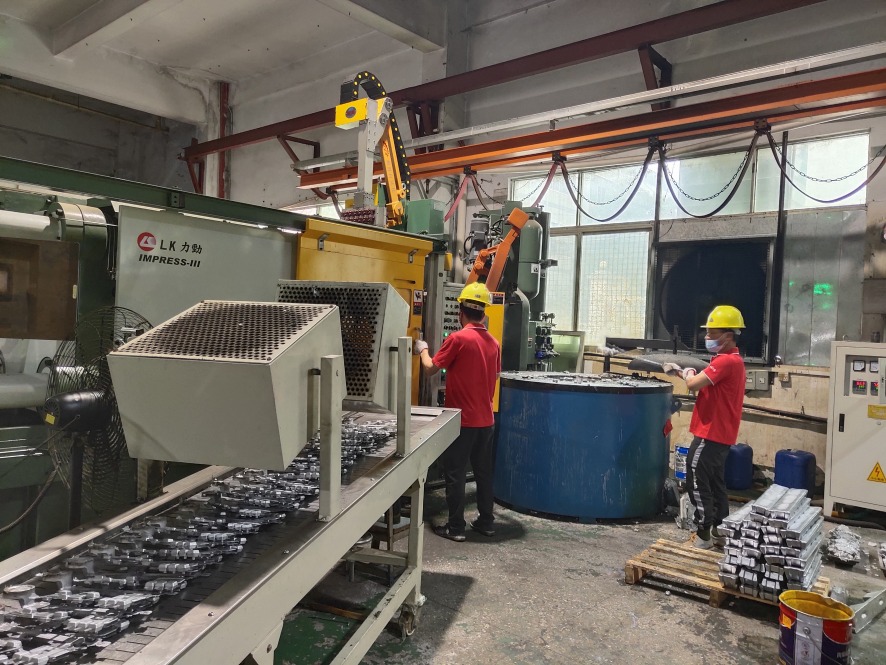
Molten metal does not travel directly into the product and stop. A practical die-casting system also needs a biscuit, runners, gates and overflows. Those features carry metal into the cavity, control filling and collect material at locations selected by the tooling engineer.

After casting, this additional metal is trimmed away and normally returned to a controlled recycling stream. It may not remain in the finished component, but it still affects machine selection, melt handling, cycle economics and the amount of metal circulating through production.

Huayinsheng’s view: A low net part weight does not automatically mean a low-cost casting. A difficult flow path, excessive overflows, thick machining stock or an inefficient cavity layout can consume the apparent material advantage.

Seven Reasons a Density Calculation Misses the Final Cost

1. The alloy is not pure aluminum

Using 2.70 g/cm³ for every aluminum alloy is convenient, but it creates avoidable error. Use the density of the specified alloy for serious estimates.

2. The runner and overflow system also needs metal

The CAD model normally shows the saleable part, not the full shot. Tool design determines how much additional metal is required to fill the part consistently.

3. Machining removes weight but adds cost

A finished component may be lighter after drilling, milling or thread machining. Yet the casting needed machining allowance, fixtures, cutting time, tool life and inspection. Lower finished weight does not mean lower total cost.

4. Inserts and assembled components add weight

Steel pins, threaded inserts, bearings, seals and fasteners are not included when the aluminum CAD body is calculated alone. They must be counted when shipping weight or assembled-product weight matters.

5. Surface finishes change the delivered part

Powder coating, painting, plating and other finishes add a small amount of material. The weight difference may be minor, but masking, appearance control and finishing inspection can have a meaningful cost impact. Huayinsheng manages these processes through qualified long-term finishing partners and performs incoming and final quality verification.

6. Scrap rate changes material efficiency

Metal can be recycled, but rejected castings still consume melting capacity, machine time, trimming, inspection and energy. Stable tooling and process control matter more than a perfect spreadsheet estimate.

7. Part geometry decides the machine and cycle

Projected area, flow distance, wall thickness and required clamping force influence machine selection. Huayinsheng operates die-casting machines from 88T to 400T. We do not select a machine from part weight alone.

Aluminum vs Zinc: Lighter Does Not Always Mean Cheaper

For the same solid volume, a zinc alloy part can weigh well over twice as much as an aluminum part. That makes aluminum the obvious candidate when low mass is the priority. But material density does not decide the full business case.

Zamak 3 and Zamak 5 can offer excellent fluidity, thin-wall capability, fine detail, dimensional stability and long die life. Huayinsheng has produced zinc die-cast sections at 1.0 mm, with local areas reaching 0.8 mm, subject to geometry and flow evaluation. For ADC12 aluminum parts, sections around 1.5 mm may be feasible depending on part size, flow distance and tooling design.

The right question is therefore not “Which material is lighter?” It is:

Which material can meet the functional, dimensional, appearance and production-volume requirements at the lowest total delivered cost?

Can You Verify a CAD Weight by Measuring the Real Part?

Yes, but the comparison must use the same condition. Check whether the sample includes machining, inserts, coating, oil, residual burrs or assembled hardware. A small difference between calculated and measured weight does not automatically indicate a material problem.

A useful review follows this order:

  1. Confirm the alloy and applicable specification.
  2. Confirm that the CAD model represents the same revision as the sample.
  3. Measure the net sample without unrelated hardware.
  4. Account for machining, inserts and finishing.
  5. Use dimensional and material tests if the difference remains abnormal.

For quality control, weight can be a fast process signal, but it is not a substitute for dimensional inspection, material verification, X-ray analysis or leak testing when those controls are required.

What Huayinsheng Needs to Estimate Your Part Weight and Cost

A useful quotation begins with more than a density value. Send us:

  • A 3D file, preferably STEP, STP, X_T or IGS
  • A 2D drawing showing tolerances and critical features
  • The required alloy, or permission for us to recommend one
  • Annual and order quantities
  • Surface-finish and appearance requirements
  • CNC machining, leak testing and assembly requirements

Our team reviews the drawing, estimates net weight, evaluates manufacturability and considers the full route from tooling through casting, CNC machining, managed surface finishing, inspection, assembly and packaging.

Frequently Asked Questions

What is the density of aluminum in g/cm³?

The commonly quoted value is approximately 2.70 g/cm³. Individual aluminum alloys may differ, so use the specified alloy value for engineering calculations.

What is the typical density of ADC12?

A typical early-estimate value is approximately 2.74 g/cm³. Project documentation and the relevant material specification should govern controlled calculations.

Is aluminum lighter than zinc?

Yes. Aluminum is much less dense than Zamak zinc alloys. However, weight alone does not determine tooling life, wall thickness, surface quality or total part cost.

Can Huayinsheng calculate the weight from my 3D drawing?

Yes. Send the 3D model, alloy requirement and annual quantity. We can estimate theoretical net weight and then evaluate the additional production factors required for a practical die-casting quotation.

A Density Number Is Easy. A Reliable Part Estimate Takes Engineering.

Send Huayinsheng your drawing, alloy, annual quantity and finishing requirements. We will review the weight, manufacturability and complete production route before quoting.

Send Your Drawing for Review

Related News
Leave me a message
X
We use cookies to offer you a better browsing experience, analyze site traffic and personalize content. By using this site, you agree to our use of cookies. Privacy Policy
RejectAccept