News

The Die Casting Tolerance Trap: When “More Precise” Becomes More Expensive

2026-09-26 0 Leave me a message

The quotation looked too high.

The part was not unusually large. The alloy was common. The annual volume was reasonable. Nothing about the project appeared especially difficult.

Then the drawing reached the engineering team.

The real cost driver was not the aluminum. It was not the size of the part. It was one tolerance callout that changed a straightforward die-casting project into a die casting, CNC machining, special fixturing and additional inspection project.

The function of the part had not changed.

Only the manufacturing route—and the cost—had changed.

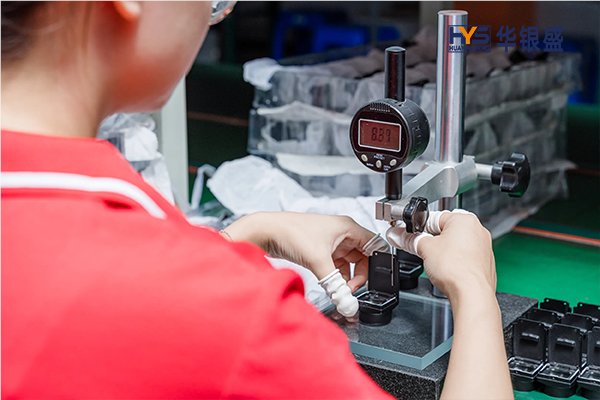
Huayinsheng technician inspecting a die-cast component with a digital height gauge

Dimensional inspection of a die-cast component at Huayinsheng.

This is the die casting tolerance trap. A tighter number can make a drawing look more precise, but that does not always make the final product better.

Huayinsheng’s view:
Precision should protect function, not decorate a drawing.

One Number Can Change the Whole Quotation

A die-cast component is not manufactured in the same way as a part machined from a solid block of metal.

Molten alloy enters a steel die, fills the cavity, cools and solidifies. During this process, metal flow, shrinkage, wall thickness, die temperature, ejection and part geometry can all affect the final dimensions.

That does not mean die casting is inaccurate. It means the tolerance must match the process and the function of the feature.

If a general housing dimension can be produced reliably as-cast, the process remains efficient. But if the same dimension is given a much tighter requirement, the supplier may need to add CNC machining after die casting.

Machining may then require a dedicated fixture. The machined feature needs inspection. If the tolerance is particularly sensitive, the inspection frequency may also increase.

A small change on the drawing can therefore trigger four separate costs:

  • Additional CNC machining
  • Custom fixturing
  • More inspection time
  • Higher rejection risk

This is why two suppliers can look at the same 3D model and return very different quotations. One may quote the part according to its functional needs. Another may simply add machining and inspection everywhere to reduce its own risk.

The cheapest-looking design is not always the cheapest part to manufacture.

Tight Tolerances Are Not the Enemy

There are dimensions that deserve tight control.

A bearing bore cannot be treated like a decorative surface. A sealing face cannot be treated like an internal wall that never touches another component. A locating hole cannot move freely if it controls the position of an entire assembly.

Tight tolerances are usually justified when a dimension directly affects:

  • Assembly and alignment
  • Sealing performance
  • Bearing or shaft fit
  • Rotating movement
  • Electrical or thermal contact
  • Safety or product performance
  • Automated assembly

In these situations, paying for precision makes sense. CNC machining, controlled datums and detailed inspection may be necessary.

The problem begins when the same level of precision is applied to dimensions that do not affect how the product works.

The Most Expensive Tolerance May Be the One You Do Not Need

Over-specification often begins innocently.

A prototype may have been CNC machined from solid aluminum. When the project moves to die casting for mass production, the original machining tolerances remain on the drawing.

Or a designer may apply the same general tolerance to every dimension because it appears safer.

Sometimes a tolerance is copied from an earlier product without checking whether the new assembly works in the same way.

The result is a drawing where every dimension appears critical—even though only a few dimensions actually control the product.

Relaxing a tolerance after tooling has started may require another drawing review, new samples, fixture changes or customer approval. Leaving the unnecessary tolerance in place means paying for it in every future production batch.

The best time to challenge an unnecessary tolerance is before the mold is opened.

Three Questions We Ask Before Adding CNC Machining

When Huayinsheng reviews a die-casting project, a tight tolerance should lead to three questions.

1. What happens if this dimension moves?

Does the part fail to assemble? Does it leak? Does it create noise, wear, vibration or visible mismatch?

If nothing meaningful happens, the tolerance may not be protecting a real function.

2. Can the feature be controlled reliably as-cast?

Some features are naturally stable in die casting. Others are affected by parting lines, shrinkage, draft, wall thickness or ejection.

The location and geometry of the feature matter just as much as the tolerance value itself.

3. Is machining the best solution?

CNC machining is sometimes the correct answer. But it should be added for a reason.

In other cases, changing the datum, moving a feature, adjusting the wall thickness or improving the assembly clearance may solve the same problem more efficiently.

The goal is not to remove precision. The goal is to place precision where it creates value.

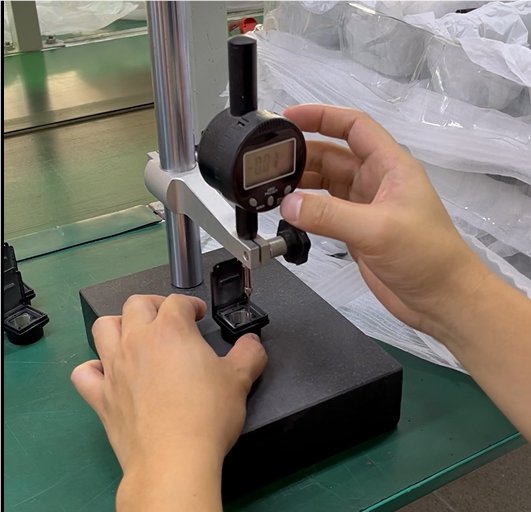
Digital height inspection of a die-cast component at Huayinsheng

A height gauge verifies a critical dimension on a production die casting.

At Huayinsheng, inspection is not about measuring every dimension simply because it appears on a drawing. It is about controlling the dimensions that determine whether the part will assemble, seal and perform as intended.

A Better Way to Mark Your Drawing

Before sending an RFQ, divide the drawing requirements into three groups.

  1. Critical dimensions: features that affect assembly, sealing, movement, safety or performance.
  2. Important but adjustable dimensions: features that affect appearance or positioning but still have acceptable variation.
  3. General dimensions: features that can use practical casting tolerances unless there is a functional reason to control them more tightly.

This hierarchy helps the engineering team understand where manufacturing resources should be focused.

It also helps the buyer compare quotations more fairly. If one supplier includes extensive machining and another plans to produce the same features as-cast, the two prices may not represent the same manufacturing plan.

A clear tolerance strategy makes the quotation clearer too.

The Drawing Should Communicate Intent, Not Fear

Some drawings become over-specified because the buyer wants to eliminate uncertainty.

That is understandable. No one wants parts that do not assemble.

But adding tighter numbers everywhere does not automatically eliminate risk. In some cases, it simply moves the risk into tooling, machining, inspection and production yield.

A better drawing communicates what the part needs to do.

Tell the supplier which surface seals, which hole locates the assembly, which bore carries a bearing and which area is cosmetic. Those details are often more useful than applying the same tight tolerance to every feature.

A capable die-casting supplier should not only answer, “Can we make it?”
The supplier should also ask, “Does it need to be made this way?”

Huayinsheng’s Position: Challenge the Cost Before Cutting the Tool

We would rather discuss a difficult tolerance before die-casting mold manufacturing than explain an expensive change after the first samples arrive.

That discussion may confirm that the tight requirement is necessary. It may lead to CNC machining on a critical feature. It may also reveal that a non-functional dimension can use a more practical as-cast tolerance.

All three outcomes are useful because they are based on the function of the part—not on assumptions.

Early DFM review gives the buyer a chance to understand:

  • Which dimensions can remain as-cast
  • Which dimensions should be CNC machined
  • Which datums will be used for machining and inspection
  • Which requirements could affect tooling or lead time
  • Which tolerances may be adding cost without improving performance

That is where real cost reduction begins. Not by buying cheaper metal, and not by choosing the lowest quotation, but by removing manufacturing work that the product never needed.

Before You Accept the Next Quotation

If a die-casting quotation is higher than expected, do not look only at the unit price.

Ask which tolerances require machining. Ask which features require special fixtures. Ask how the critical dimensions will be inspected. Ask whether every precision requirement is tied to an actual product function.

One line on a drawing can change the entire manufacturing route.

It is worth understanding that line before paying for it across thousands of parts.

Not sure whether your tolerances are costing too much?

Send Huayinsheng your 3D model, 2D drawing and critical dimensional requirements. Our team can review which features are suitable for die casting, which may need secondary CNC machining, and where a design adjustment could simplify production before tooling begins.

Send Your Drawing for Review
Related News
Leave me a message
X
We use cookies to offer you a better browsing experience, analyze site traffic and personalize content. By using this site, you agree to our use of cookies. Privacy Policy
RejectAccept