News

Melting Point of Aluminum: Why 660°C Is Not Your ADC12 Die Casting Temperature

2026-09-29 0 Leave me a message

Pure aluminum melts at about 660°C (1220°F). That is a useful material fact—but it is not the temperature a die caster should copy into an ADC12 production setting.

This distinction matters because buyers often see one melting-point number and assume the process is simple: heat the metal above 660°C, inject it and make the part. In real production, ADC12 is an alloy, it melts across a range, and the temperature measured in the furnace is not necessarily the temperature that reaches the die cavity.

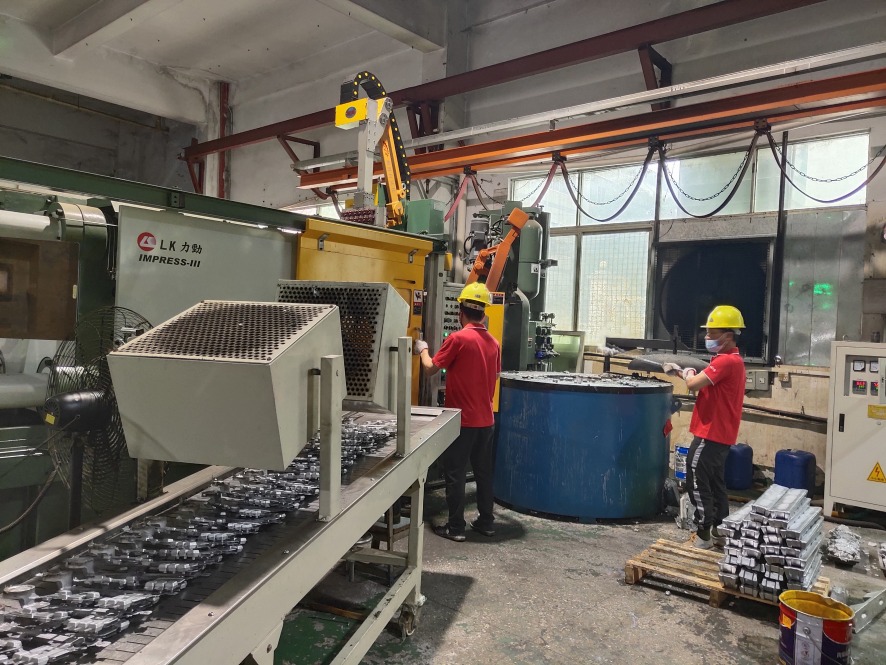
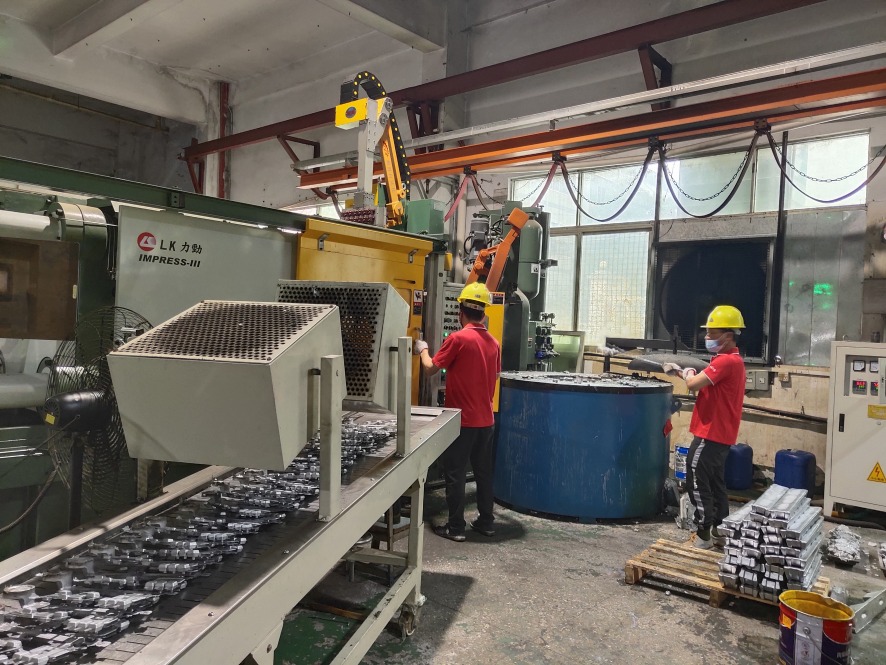
At Huayinsheng, metal temperature is treated as one part of a thermal system. Alloy chemistry, holding time, transfer heat loss, die temperature, fill time, wall thickness, gating and venting all work together. Raising the temperature may improve filling in one situation and create oxidation, gas or soldering problems in another.

Quick answer

  • Pure aluminum: approximately 660.3°C / 1220.5°F
  • Aluminum alloys: normally melt and solidify across a temperature range
  • ADC12 die casting: the production temperature must be established for the alloy, part, machine, die and quality requirement—not copied from the pure-aluminum melting point

What Is the Melting Point of Aluminum?

The melting point of high-purity aluminum is approximately 660.3°C, which is about 1220.5°F or 933.5 K. For a pure metal under controlled conditions, melting and freezing occur at a well-defined temperature.

Unit Pure aluminum melting point
Celsius Approximately 660.3°C
Fahrenheit Approximately 1220.5°F
Kelvin Approximately 933.5 K

That value answers a chemistry question. A die-casting quotation and process plan require a different question: What alloy is being cast, and how does it behave from the furnace to the cavity?

Why ADC12 Does Not Have the Same Melting Behavior as Pure Aluminum

ADC12 contains substantial silicon together with copper and other controlled elements. These additions give the alloy the fluidity, castability, strength and machining behavior needed for high-pressure die casting. They also change how the metal melts and solidifies.

Instead of changing from fully solid to fully liquid at one exact number, an aluminum casting alloy normally passes through a melting range:

  • Solidus: below this temperature, the alloy is fully solid.
  • Mushy range: solid and liquid phases coexist.
  • Liquidus: above this temperature, the alloy is fully liquid.

The exact range depends on the actual chemistry and governing specification. That is why material certificates and controlled melt practice matter. A generic internet value should not override the alloy specification used for the project.

Melting Point, Melt Temperature and Die Temperature Are Not the Same

Term What it means Why it matters
Melting point or range The material property describing the solid-to-liquid transition Useful for understanding the alloy, but not a complete process setting
Furnace or holding temperature The measured temperature of molten metal in the melting or holding system Affects fluidity, oxidation, dross, gas pickup, energy and consistency
Transfer temperature The metal condition after ladling and transport toward the shot sleeve Heat is lost during transfer, so the furnace reading is not the entire story
Die temperature The thermal condition of the steel die Affects early freezing, flow marks, soldering, solidification and cycle stability

A good process does not chase one temperature reading. It maintains a stable thermal window from metal preparation through ejection.

What Happens When the Metal Is Too Cool?

If the metal loses too much heat before or during filling, it may begin to solidify before the cavity is complete. Depending on the part and flow path, the result may include:

  • Short fill or incomplete thin features
  • Cold shuts where two flow fronts fail to fuse
  • Visible flow marks or poor surface reproduction
  • Greater sensitivity at long flow distances
  • Unstable filling from shot to shot

But “increase the metal temperature” is not always the right correction. A blocked vent, undersized gate, poor flow path, cold local die region or unsuitable wall-thickness transition can produce a similar symptom.

What Happens When the Metal Is Too Hot?

More heat can extend fluidity, but excessive temperature creates a different set of risks:

  • Faster oxidation and increased dross formation
  • Greater opportunity for hydrogen pickup and gas-related quality problems
  • Higher thermal load on the die and furnace system
  • Greater soldering or sticking risk in unfavorable areas
  • Longer solidification or cycle effects
  • More energy consumption without guaranteed quality improvement

Huayinsheng’s view: The correct target is not the highest temperature that fills the part. It is the lowest stable thermal window that fills the cavity, protects the required quality and remains controllable in volume production.

Why “Just Raise the Temperature” Is a Poor Thin-Wall Strategy

Huayinsheng has experience evaluating ADC12 aluminum sections around 1.5 mm, depending on part size, flow distance, geometry and tooling. Thin-wall feasibility cannot be decided from metal temperature alone.

A thin-wall review should include:

  • Distance from the gate to the final fill area
  • Wall uniformity and sudden section changes
  • Gate location and cross-sectional area
  • Overflow and vent locations
  • Local die-temperature balance
  • Required surface appearance and mechanical function
  • Machine capability and repeatable fill profile

If the geometry forces the metal to travel too far through a thin section, adding heat may only move the problem. An early DFM change to gate position, wall transition, rib layout or overflow location can be more reliable than a more aggressive process setting.

Aluminum vs Zinc: Why the Casting Process Is Different

Pure zinc freezes at approximately 419.5°C, much lower than pure aluminum. Conventional Zamak alloys also operate at lower temperatures than aluminum casting alloys. This difference helps explain why Zamak 3 and Zamak 5 are commonly produced by hot-chamber die casting, while aluminum alloys such as ADC12 are normally produced by cold-chamber machines.

In hot-chamber casting, the injection system is immersed in the molten metal. In cold-chamber casting, aluminum is melted externally and transferred into the shot sleeve for each cycle. The transfer step creates additional temperature and handling considerations.

This does not mean zinc is automatically the better material. Aluminum offers lower density and advantages for many larger, lightweight or thermally demanding components. Zinc offers excellent fluidity, fine detail and thin-wall capability for many compact parts. Material selection should be based on the finished product, not melting point alone.

How Melt Control Affects the Finished Part

Melt control continues to matter after the metal becomes liquid. A stable production system should consider:

  1. Alloy verification: Confirm the specified ADC12 chemistry and prevent uncontrolled mixing.
  2. Charge condition: Keep ingot, returns and tools clean and dry.
  3. Time and temperature: Avoid unnecessary overheating or excessive holding.
  4. Oxide and dross control: Limit turbulence and contamination during melting and transfer.
  5. Measurement discipline: Use suitable instruments, locations and frequency so readings can be compared.
  6. Traceability: Connect material and process records to the production lot when the project requires it.

A bright, complete casting is not enough evidence by itself. Critical projects may also require spectrometer verification, dimensional inspection, CMM measurement, leak testing or other controls linked to the drawing and application.

What Buyers Should Ask Instead of “What Temperature Do You Use?”

  • How do you verify the incoming alloy and prevent material mixing?
  • Where and how is melt temperature measured?
  • How do you control transfer time and heat loss?
  • How are die temperature and cooling kept stable?
  • What evidence connects the thermal process to porosity, fill and dimensional results?
  • What happens when the process moves outside the approved window?

A supplier should not give the same temperature answer for every ADC12 part. A more credible answer explains how the operating window is established and controlled for the specific geometry and quality requirement.

How Huayinsheng Reviews an ADC12 Project

Huayinsheng operates die-casting machines from 88T to 400T and manages the project from drawing review and tooling through ADC12 casting, CNC machining, outsourced surface finishing through qualified long-term partners, assembly, inspection and packaging.

During review, we consider wall thickness, projected area, critical dimensions, sealing surfaces, machining depth, appearance requirements and annual volume. Metal temperature is then managed as part of the complete manufacturing plan—not treated as an isolated number.

Frequently Asked Questions

What is the melting point of aluminum in Celsius?

High-purity aluminum melts at approximately 660.3°C.

What is the melting point of aluminum in Fahrenheit?

The equivalent is approximately 1220.5°F.

Does ADC12 melt at exactly 660°C?

No. ADC12 is an aluminum-silicon-copper alloy and melts across a range rather than at the single fixed point used for high-purity aluminum.

Why is die-casting temperature higher than the alloy’s liquidus?

The process needs enough superheat and thermal stability to keep the metal fluid through holding, transfer and cavity filling. The correct margin depends on the alloy, equipment, geometry and process window.

Can higher metal temperature eliminate cold shuts?

Sometimes temperature contributes, but cold shuts can also result from gate design, flow distance, die temperature, fill time, venting and flow-front location. Raising temperature without confirming the cause may create other defects.

Do Not Design an ADC12 Part Around One Temperature Number

Send Huayinsheng your 3D drawing, critical requirements and annual quantity. We will review wall thickness, flow distance, tooling, machining and the complete production route before quoting.

Send Your Drawing for Review

Related News
Leave me a message
X
We use cookies to offer you a better browsing experience, analyze site traffic and personalize content. By using this site, you agree to our use of cookies. Privacy Policy
RejectAccept